AeroChar Is Here: Purpose-Built Biochar for Poultry Litter
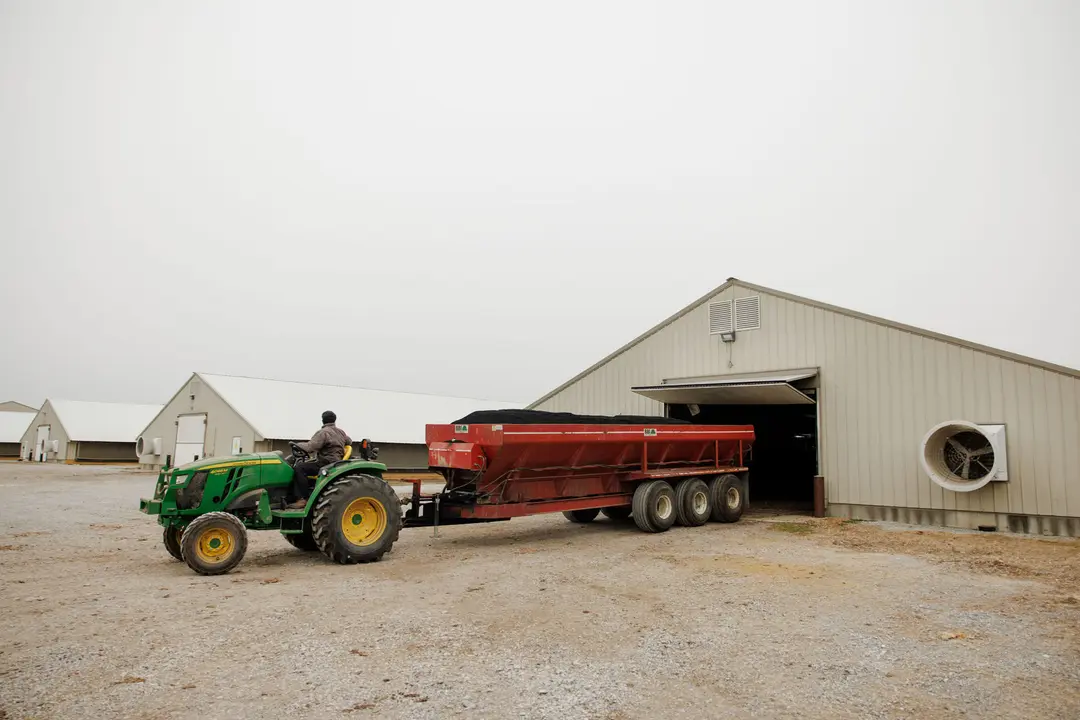
Today, Valorize Systems is releasing AeroChar™, a pH-modified biochar for poultry litter designed to keep more nitrogen and phosphorus in the litter while helping growers manage ammonia and moisture.
The release comes with strong demand already in place. We have a long waitlist of poultry growers and integrators across the Poultry Belt looking for a litter treatment that does more than provide a short-lived change in house conditions. That interest reflects a practical challenge: ammonia, moisture, litter value, and nutrient loss are connected, but most treatments address only one part of the system.
AeroChar was built to address them together.
What Is AeroChar?
AeroChar is an engineered poultry litter amendment made from qualified biochar. Valorize modifies the material's pH and surface chemistry, controls its particle size, and tests the finished product against a defined specification.
That distinction matters. Raw biochar is a porous, carbon-rich material that can retain water and nutrients, but biochar properties vary by feedstock and production process. Raw biochar is also often alkaline. In poultry litter, that higher pH can work against ammonia control by favoring the conversion of ammonium into volatile ammonia.
AeroChar is not simply raw charcoal added to chicken bedding. It is a purpose-built, pH-modified biochar formulated for use on poultry litter.
Why Use Biochar in Poultry Litter?
Poultry litter has to manage several jobs at once. It provides the surface birds live on, receives manure and water throughout a flock, and becomes a nutrient-bearing material at cleanout. When conditions shift, growers can face wet litter, caking, elevated ammonia, reduced paw quality, higher ventilation demands, and the loss of fertilizer value.
AeroChar is designed around three linked functions:
- Ammonia management: Its modified chemistry is designed to help nitrogen remain as nonvolatile ammonium instead of escaping into the house as ammonia.
- Moisture management: Its porous carbon structure holds approximately twice its weight in water, supporting drier litter conditions.
- Nutrient retention: Nitrogen and phosphorus that remain in the litter can contribute to its value at cleanout instead of being lost to the air or water.
These functions are why the conversation about biochar for chickens should go beyond odor control. The goal is not to mask ammonia. It is to manage the chemistry and moisture conditions that influence litter performance over the course of a flock.
Why Raw Biochar Is Not Enough
The published research points to an important conclusion: the performance of biochar in poultry systems depends on its chemistry, not just its porosity.
In a 21-day University of Georgia incubation study, acidified biochars reduced ammonia loss from poultry litter by 58–63% when surface-applied and 56–60% when incorporated. The researchers attributed the result to lower pH, greater hydrogen buffering capacity, and ammonium retention on the biochar's exchange sites. The study evaluated treated litter applied to soil rather than a live commercial broiler house, so its results should not be treated as an AeroChar flock-performance claim. It does, however, demonstrate why acidification matters. (Doydora et al., 2011)
More recent research reinforces the same point. A 42-day broiler study found that unmodified biochar produced the lowest litter moisture of the tested treatments but the highest ammonia concentration. The authors concluded that biochar may help with moisture while further research is needed to understand its effect on ammonia. (Mohammadi-Aragh et al., 2025)
Another 40-day incubation study found that raw biochar reduced cumulative ammonia emissions by 41–46% at the two highest tested rates, while sodium bisulfate produced larger ammonia reductions in that static test. (Poudel et al., 2024)
Taken together, the evidence is clear about one thing: not all biochar for poultry performs the same way. Moisture absorption alone is not ammonia control. Feedstock, pH, surface chemistry, particle size, application rate, and operating conditions all matter. AeroChar is engineered around those variables instead of asking growers to take a chance on an inconsistent raw material.
AeroChar vs. Conventional Poultry Litter Acidifiers
Conventional acidifiers such as sodium bisulfate are established tools for reducing litter pH and controlling ammonia early in a flock. AeroChar starts with a different product architecture: acid is held within a porous carbon matrix that can also manage moisture and remain in the litter at cleanout.
| Consideration | Conventional Sodium Bisulfate Treatment | AeroChar |
|---|---|---|
| Primary mechanism | Topical acid consumed as it reacts | Modified acidity held in a porous carbon matrix |
| Moisture management | Does not add meaningful water-holding capacity | Holds approximately 2× its weight in water |
| Material at cleanout | Adds sodium and sulfate salts | Leaves stable carbon while retaining nitrogen and phosphorus in the litter |
| Application | Commonly applied at placement; may require mid-flock reapplication | Applied once at placement; full-flock duration is being evaluated in trials |
AeroChar is not presented as a universal replacement for every litter-management program. House conditions, litter history, flock timing, ventilation, and integrator protocols differ. That is why Valorize begins with a measured, side-by-side trial.
Built for Commercial Poultry Houses
A new poultry litter treatment has to work in the house, not just in a laboratory.
AeroChar is a charcoal-black material applied to litter before chick placement. It works with the spreading equipment and placement routine growers already use, so it does not require a new piece of equipment or a separate application workflow.
The recommended initial application range is 75–125 pounds per 1,000 square feet, with the final rate set by the house, litter conditions, and trial protocol. Valorize writes the protocol, ships the material, and pairs treated houses against the grower's current program so the result can be measured rather than argued.
Every load also ships with a certificate of analysis for the finished AeroChar—not merely the incoming raw biochar. The certificate covers pH, moisture, bulk density, particle-size distribution, fixed carbon, ash, feedstock, and batch. A full independent laboratory panel, including trace metals, is available on request.
Demand Across the Poultry Belt
Before today's release, growers and integrators across the Poultry Belt were already asking to evaluate AeroChar in commercial houses. That demand has produced a long waitlist spanning poultry growers and live-production teams at integrated poultry companies.
The breadth of the waitlist is important. Growers are focused on practical house conditions and flock economics. Integrators are evaluating consistency, repeatability, animal-welfare outcomes, nutrient management, and supply at scale. AeroChar was developed to give both groups a product specification and a trial process they can evaluate with real operating data.
Maintaining the same finished-material specification from load to load will remain central as AeroChar reaches more poultry houses.
What AeroChar Is—and What It Is Not
Searches for “biochar for poultry” often combine several different applications, including feed additives, bedding amendments, manure treatment, and soil application. AeroChar has a specific use:
- AeroChar is a poultry litter treatment applied before placement.
- AeroChar is not a poultry feed additive and is not formulated for ingestion.
- AeroChar is made from qualified biochar, then pH-modified and graded to a finished specification.
- AeroChar is intended to complement good ventilation, water-line management, litter maintenance, and integrator-approved flock practices—not replace them.
That clarity matters because products built for different applications should not be treated as interchangeable.
Frequently Asked Questions About Biochar for Poultry
Can Biochar Reduce Ammonia in a Chicken House?
Biochar's effect on ammonia depends heavily on its pH and other material properties. Published studies show that acidified biochar can reduce ammonia loss under controlled conditions, while unmodified alkaline biochar can perform poorly on ammonia even when it improves moisture. AeroChar modifies the pH and surface chemistry specifically for poultry litter, and commercial-house performance is evaluated through side-by-side trials.
How Much AeroChar Does a Poultry House Need?
The recommended initial range is 75–125 pounds per 1,000 square feet at placement. The exact amount depends on house size, existing litter conditions, and the agreed trial protocol.
Does AeroChar Replace Ventilation?
No. AeroChar is a litter amendment, not a substitute for proper minimum ventilation, water management, or routine house management. It is designed to help control two drivers that ventilation must manage—ammonia and moisture—within a complete operating program.
Is AeroChar the Same as Raw Biochar?
No. AeroChar starts with qualified raw biochar, but Valorize modifies its pH and surface chemistry, controls its particle size, and verifies each finished load against a product specification.
Can AeroChar Be Used in Broiler and Layer Houses?
AeroChar is designed as a litter treatment for commercial poultry operations. The trial protocol should be matched to the housing system, litter or bedding program, and the integrator's operating requirements.
Join the AeroChar Waitlist
The release of AeroChar marks a new approach to biochar for poultry: engineered chemistry, a consistent finished-material specification, and commercial trials designed around the way growers and integrators actually operate.
If you manage poultry houses, lead live production, oversee animal welfare or sustainability, or procure litter treatments across an integrated system, join the AeroChar waitlist and request a trial.
Demand across the Poultry Belt is already strong. Contact Valorize to discuss your houses, current litter program, trial timing, and supply requirements.